
Products
Filters
Marketplace

- Report
NbS Framework Reports for Fast Follower Cities
This Deliverable presents a cross-city analysis of how the cities have adapted and applied the Connecting Nature Framework for the large-scale implementation of nature-based solutions. Specifically, we identify the diverse types of innovations materializing in the cities to overcome barriers and
- Document
Cookbook on virtual and physical interactive exchange formats for cities (EN/ES)
Lessons learned from the city pairings process (T4.2) will be collected and published by CA and UNGL in a cookbook format to support further effective exchanges between INTERLACE cities, as well as beyond the project.
- Document
- Image
- Infographic
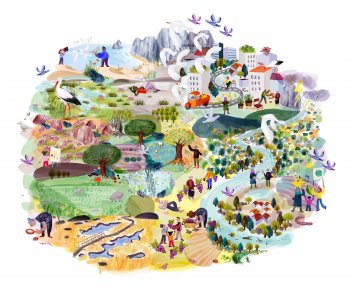
NetworkNature Visualisation: EU-Funded Nature-based solutions research projects addressing Societal Challenges across Ecosystems
In this document you can find a visual representation of the different types of ecosystems and most relevant societal challenges in the context of NbS, with the aim to simplify and communicate these concepts, while inspiring NbS good practices. || The European Commission defines Nature-
- Document
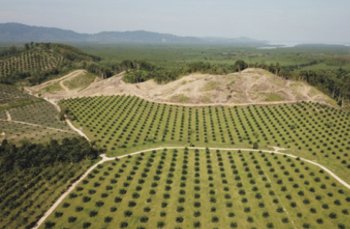
Conserving tropical biodiversity via market forces and spatial targeting
Successful conservation on private land depends on three factors: the conservation effectiveness for the target species; the private costs in reduced productivity; and the private benefits that conservation provides, for example, by enhancing the value of remaining production. Research on palm-
- Guidance
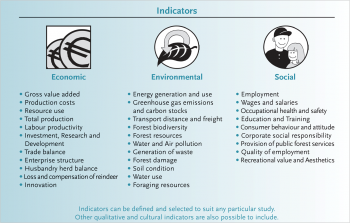
Tool for Sustainability Impact Assessment (ToSIA)
ToSIA is a decision support tool that was originally developed for the forestry sector, which analyses sustainability impacts of Forest-Wood-Chains (FWCs) and value chains related to resource use. Value chains are chains of production processes that are linked with products. ToSIA compares

- Report
What are nature-based solutions? Risks, concerns and opportunities
This information brief has been produced as part of a partnership between the Global Youth Biodiversity Network, Youth4Nature and YOUNGO to explore the risks, concerns and opportunities around the concept of Nature-based Solutions, and to share this information with our youth communities. It is
- Document
- Product
- Report
Report: The State of Finance for Nature in the G20
The State of Finance for Nature in the G20 report attempts to capture the complete amount and future need for G20 country spending on nature-based solutions assets and activities. It reveals that current G20 investments in nature-based solutions are insufficient, at USD 120 billion/year, and G20
- Document
Assesing the efficiency of different prevention methods of pine pitch canker, and the creation of a manual with the good pratices to follow in plant nurseries
This project developed methods to prevent Fusarium circinatum spread in pine nurseries, including seed, container, and water disinfection techniques, and tested soil alternatives to pine bark for healthier plant growth.
- Software
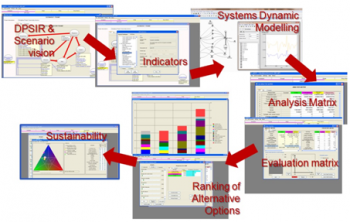
mulino Decision Support System tool (mDSS)
The mDSS software is a generic indicator-based Decision Support System (DSS) developed to assist decision makers in the participatory management of environmental problems by applying several Multi-Criteria Analysis Methods and Group Decision Making. Specifically, it supports Decision/Policy Makers

- Document
Policy-driven Monitoring and Evaluation across Europe: Priorities for Improvement
This 4-page briefing summarises the main challenges and implications for improving policy-driven monitoring and evaluation. Much attention and resources are dedicated to fulfilling the requirements and guidelines of environmental policies. An interdisciplinary pan-European team studied the
- Document
- Paper
- Report
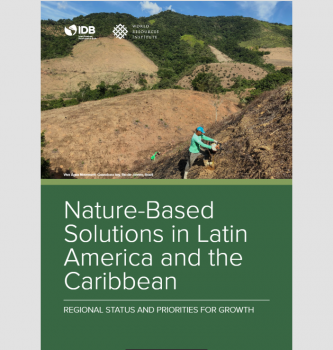
Nature-Based Solutions in Latin America and the Caribbean
As the world recovers from the global recession and pandemic, investment in development proj- ects and infrastructure is poised to surge (World Bank 2020) . But channeling that investment into traditional infrastructure, often built with concrete and steel, risks accelerating greenhouse gas
- Guidance
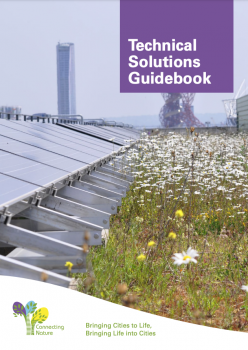
Technical Solutions Guidebook
This Guidebook introduces the technical components that go into the planning, delivery, and long-term stewardship of nature-based solutions. It provides examples of technical aspects of nature-based solutions and shows why this is important to consider to be able to get NbS benefits (for example,

- Dataset
ALARM - Assessing large scale risks for biodiversity with tested methods
Based on a better understanding of terrestrial and freshwater biodiversity and ecosystem functioning ALARM will develop and test methods and protocols for the assessment of large-scale environmental risks in order to minimise negative direct and indirect human impacts.
- Document
GIZ ValuES - Methods Navigator
Ecosystem service assessments should be ‘issue-driven’. They can be done to gain new insights, to make a strong argument, to start a discussion, to help settle a negotiation, to enhance a planning process, or to reach a decision. There are many different methods for doing an assessment. Helping
- Training
TEEBAgriFood Valuation Framework
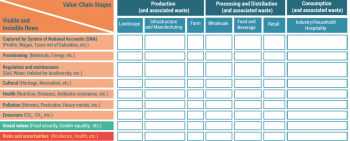
The TEEBAgriFood valuation framework is a frame of analysis that can enable us to answer the question "what should we value, and why?" The framework ensures that nothing important is missed, and that the full range of impacts and dependencies (including externalities) from eco-agri-food
- Paper
The impact of exposure to green or bluespace on dietary intake and food choices among adults—A systematic literature review
Extensive research has shown that spending time in natural greenspaces has a positive impact on health. However, there is limited evidence regarding potential factors that may influence these effects. This review aimed to assess the strength of the evidence and potential impact of exposure to green

- Empty
GoGreenRoutes: Outline of the project presentation
Learn all about GoGreenRoutes in this introductory project presentation. Publication Date: 29 Jul 2021 Author(s): Maynooth University and ICLEI Europe

- Document
- Product
- Report
CONNECTING NATURE FRAMEWORK A CORUÑA: AN URBAN GARDENS GREEN NETWORK
The CN Framework, together with the valuable support from project partners, has provided the city with the tools to successfully develop the CN Exemplar in the three phases of Planning, Delivery and Stewardship
- Empty
Atlas of ecosystem services for the Grenoble urban region (France)
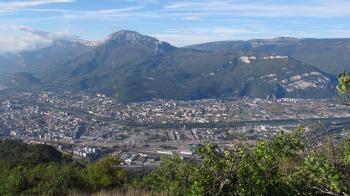
We analyzed future land use and its effects on biodiversity and ecosystem services for the Grenoble urban area. We used a toolbox of ecosystem service models to analyze trade-offs and synergies between biodiversity, critical ecosystem services under 4 scenarios for 2040 compared to present. This
- Report
Nature-based solutions towards sustainable communities: Analysis of EU-funded projects
Over the past thirty years local communities have remained at the heart of efforts to address sustainable development across the European Union, mobilised by a wide range of policies and initiatives to develop sustainable, smart, low carbon, resilient and eco-cities. As interventions that promise
- ‹ previous
- 31 of 41
- next ›