Products
Filters
Marketplace

- Empty
- Document
- Guidance
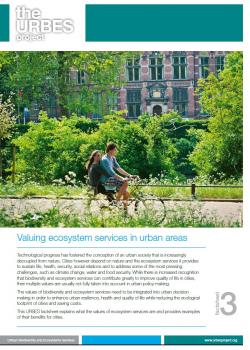
Valuing ecosystem services in urban areas - URBES Factsheet #3
While there is increased recognition that biodiversity and ecosystem services can contribute greatly to improve quality of life in cities, their multiple values are usually not fully taken into account in urban policy-making. The values of biodiversity and ecosystem services need to be integrated
- Slides
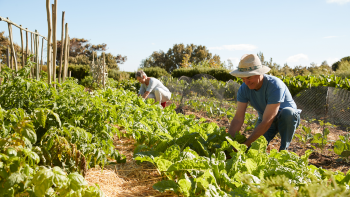
Presentation on Expanding Sustainable Agriculture
This powerpoint slide provides a case study on a successful example of nature-based solution applied in the agriculture sector: Agroforestry to make the agricultural systems in Montpellier more resilient to the effects of climate change. The agroforestry scheme was implemented under the SAFE
- Document
- Training
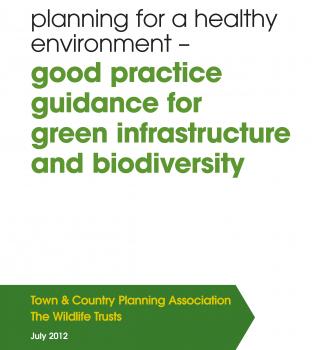
Planning for a healthy environment - good practice guidance for green infrastructure and biodiversity
This guidance is designed to offer advice to planning practitioners on how green infrastructure and biodiversity can be enhanced and protected through the planning system. It summarises the latest policy drivers and distils the best of our current policy responses. It also sets out practical

- Video
The BUFFER project - how research allowed classifying Marine Protected Areas for better clarity in the sustainable use of natural resources and conservation of biodiversity
The BUFFER project has been awarded the second edition of the BiodivERsA Prize for Excellence and Impact, highlighting its excellent achievements in terms of advancing science and practice of biodiversity and ecosystem services. The project was funded under the 2011-12 BiodivERsA joint call on “
- Report
Financing Natura 2000 - EU Funding Opportunities in 2021-2027
The document is designed to help improve the uptake of EU funds for biodiversity and in particular for the management and restoration of Natura 2000 sites in the current multiannual financial framework (MFF). The guide analyses possibilities of financing investments in Natura 2000 from different EU

- Guidance
Nature4Cities - NbS Projects Implementation Handbook
This Handbook was made for government officials, practitioners or project coordinators working in the public domain and needing support in their NbS project implementation. It will be useful especially for those who are at the early stages of developing climate adaptation and mitigation

- Document
URBAN GreenUP Barriers and Boundaries Identification
This deliverable investigates the experiences and approaches of the URBAN GreenUP cities with the identification of the barriers and boundaries in terms of implementation of Nature-Based Solutions. It provides detailed descriptions of potential barriers and boundaries under the following
- Consultancy
- Event
- Software
- Training
Stakeholder Engagement and Participatory Processes
In areas such as nature based solutions and biodiversity, Prospex enables effective dialogue, lasting agreements and strategies for changing contexts. Prospex is a pioneer service provider in stakeholder engagement, strategic foresight and negotiation & conflict resolution in complex science-
- Policy Brief
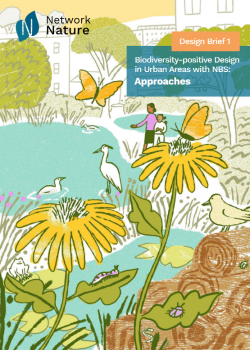
Design Brief 1- Biodiversity-positive Design in Urban Areas with NbS: Approaches
This NetworkNature design brief series, the first of its kind, comprises three design briefs on biodiversity-positive design recommendations for urban and peri-urban areas with nature-based solutions. The series, developed with support of IFLA Europe, presents simple design suggestions for
- Empty
Green space and mortality in European cities: a health impact assessment study / The Lancet Planetary Health
Natural outdoor environments including green spaces play an important role in preserving population health and wellbeing in cities, but the number of deaths that could be prevented by increasing green space in European cities is not known. This study aimed to estimate the number of natural-cause

- Training
Intregrated Biodiversity Management, South Caucasus
Together with our partners, we develop strategies to facilitate the sustainable management of biodiversity and ecosystem services across sectoral and administrative boundaries, based on solid data. We contribute to safeguarding the diversity of species and ecosystems for future generations.
- Document
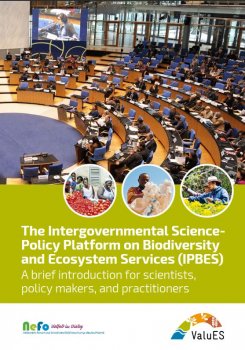
GIZ ValuES - IPBES: A brief introduction for scientists, policy makers, and practitioners
With the publication of this brochure, NeFo and ValuES want to provide their partners and other interested parties a quick and informative overview of IPBES and the different topics and processes of this still young science-policy interface. The brochure may also encourage readers to identify
- Infographic
Ten research findings about Nature-Based Enterprises
The first results from the Connecting Nature research survey of nature-based enterprises!

- Document
ThinkNature Nature-Based Solutions Handbook
This Handbook has been developed in the framework of the ThinkNature project. Its main objective is to gather and promote state-of-the-art knowledge regarding Nature-Based Solutions (NbS), comprising a comprehensive guide to all relevant actors. To this end, each aspect of NbS is investigated, from
- Document
CONEXUS Policy Brief 3 - Increasing Community and Stakeholder Engagement in Lisbon’s Nature-Based Solutions
This Policy Brief examines Lisbon’s efforts to boost community engagement in implementing Nature-Based Solutions (NbS) to safeguard the health and well-being of residents and biodiversity. The Lisbon City Council is actively promoting community involvement and emphasising the significance of co-
- Empty
euPOLIS
Innovative euPOLIS urban planning methodology integrates nature-based solutions to enhance the health and well-being of citizens in four European cities! euPOLIS project, funded by the European Union’s Horizon 2020 program, is coordinated by the National Technical University of Athens NTUA,
- Report
NeworkNature Annual Event Report
This Report provides a summary of the presentations, panel discussions and parallel sessions of the NetworkNature Annual Event "Achieving the EU Green Deal through nature-based solutions", held on 21st October 2021.
- Video
CITIES TALK NATURE Webinars
CITIES TALK NATURE is a community of practice dedicated to restoring degraded ecosystems in municipalities in Latin America, Europe and other parts of the world. It explores the multiple advantages of restorative nature-based solutions and fosters exchange between cities. As part of the events, a
- Guidance
GIZ ValuES - Method Profile: InVEST models - Overview
InVEST is a family of tools to assess how distinct scenarios might lead to different ecosystem services and human well-being related outcomes in particular geographic areas. InVEST enables decision-makers to assess the tradeoffs associated with alternative choices and to identify areas where
- ‹ previous
- 14 of 41
- next ›