Products
Filters
Marketplace
- Document
- Product
- Paper
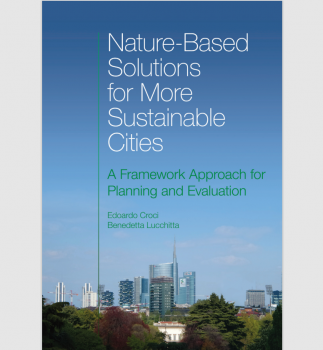
Nature-Based Solutions for More Sustainable Cities: A Framework Approach for Planning and Evaluation
There is a growing recognition and awareness that nature can help provide viable solutions to reduce vulnerability and generate value deploying the properties of natural ecosystems and the services they provide. Investing in nature can lead to substantial environmental, social, and economic

- Guidance
Commission on Ecosystem Management
Many of the world's ecosystems have undergone significant degradation with negative impacts on biological diversity and peoples' livelihoods. There is a growing realization that we will not be able to conserve the earth's biological diversity through the protection of critical areas
- Document
- Guidance
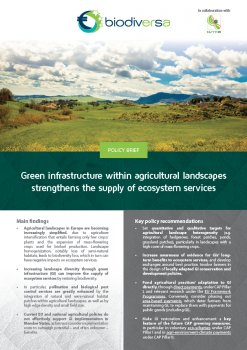
Green infrastructure within agricultural landscapes strengthens the supply of ecosystem services
The brief on “Green infrastructure within agricultural landscapes strengthens the supply of ecosystem services” presents how the results from the EC21C, FarmLand, ECODEAL, APPEAL, SmallFOREST and CONNECT projects. It provides evidence that increasing landscape diversity through green infrastructure
- Podcast
Internet of Nature Podcast
Can nature and technology — long viewed as opposing forces — work together to stabilize our climate, sustain our urban environments, and benefit our health? Internet of Nature Podcast is on a mission to find out. Join Dr. Nadina Galle as she interviews top CEOs & innovators on their

- Report
NetworkNature report on practical, research and innovation needs
This report on practical, research and innovation needs was prepared in the context of NetworkNature Work Package 3. The aim was to compile an evidence base for Nature-based Solutions (NbS), to be used to support the uptake and proliferation of NbS in planning, strengthening the practical

- Video
Seeing is Believing: West Gorton Community Park
A green space like no other. Seeing is Believing is an 'eco-tour' of West Gorton's brand new Community Park. This film is the face of a spotlight session in Greater Manchester Combined Authorities 'Green Summit' 2020, for it's role in combatting the effects of
- Report
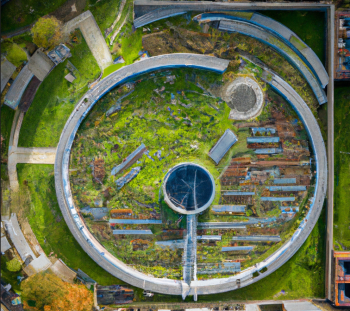
Conceptual & action framework on Low carbon | High air quality NbS potentials
The deliverable 2.1, Report knowledge base/action framework Low carbon | High air quality NbS potentials, was submitted by EURAC with contributions from TUM, TUC, ABUD, RWI, ISOCARP, KYDON, MUC, LEU, MERANO, COBZ, GLC, SMJV in June 2022. The description of the deliverable is available below and the
- Infographic
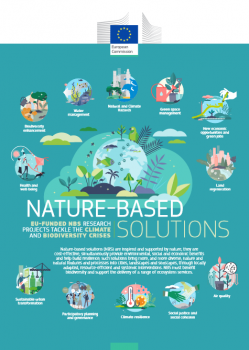
Nature-based solutions-EU-funded NbS research projects tackle the climate and biodiversity crisis
Nature-based solutions (NbS) are inspired and supported by nature, they are cost-effective, simultaneously provide environmental, social and economic benefits and help build resilience; such solutions bring more, and more diverse, nature and natural features and processes into cities, landscapes

- Dataset
- Report
LIFE programme: Short summaries of projects from the LIFE 2019 call for proposals
This EU funding for the LIFE programme projects triggered total investments of nearly €590 million to help meet these projects' ambitious goals for environment, nature, and climate action. The projects will help to achieve the European Green Deal. Here you can find a list of short summaries of
- Document
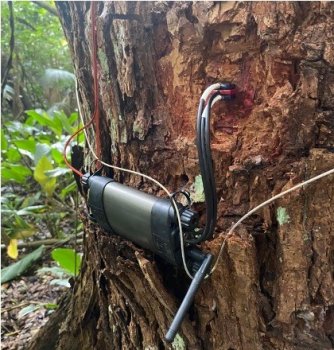
CONEXUS Life-Lab factsheet series - Monitoring ecosystem services of urban forests in São Paulo, Brazil
Trees offer various ecosystem services that can significantly cool down and improve livability in cities. Through a deeper understanding of these contributions by studying native tree species in São Paulo, we aim to provide the municipality guidelines on vegetation structure and species composition
- Training
GIZ ValuES - Fact sheet on training "Economic Valuation of Ecosystem Services"
This training course offers a general introduction to basic economic concepts, gives an overview of some principles of environmental economics, and provides a general understanding of different economic valuation methods with their pros and cons as well as an overview on how valuation can be

- Document
TELEPÜLÉSI KLÍMAADAPTÁCIÓ: Klímaadaptív gyepgazdálkodás a városban
A Veszprém város önkormányzatának megbízásából elkészült dokumentum a város és a természet kapcsolatát, valamint a város működésének hatását a klímára mutatja be. Összefoglalja az urbanizáció történetének következményeit, vagyis azt, hogy a népességrobbanás, a beépítettség növekedése és a termelési
- Empty
Seedbed Intervention: Versailles
The seedbed intervention in Versailles took place in the Square Blaise Pascal which will be the site of the NBS interventions and is currently composed of 3 sections: 1300sqm park for children with many play facilities, 1730sqm park intensive green space with cherry trees and ping pong tables and a
- Document
- Report
Insight report: BiodiverCities by 2030: Transforming Cities' Relationship with Nature
The World Economic Forum with the Government of Colombia, the Humboldt, Arup and AlphaBeta, has released this insight report to call on cities, as crucial players in reversing nature loss and climate change, to become BiodiverCities by 2030. The report showcases the opportunity for urban leaders
- Document
- Guidance
OpenNESS Synthesis paper: Ecosystem services and social justice
Understanding how changes in ecosystem services (ES) and natural capital (NC) impact on issues related to competitiveness and social justice.
- Guidance
Nature-Based Solutions Business Model Canvas
Connecting Nature has customised the well-known business model canvas tool specifically to help plan the business models for nature-based solutions. The Nature-Based Solutions Business Model Canvas is an easy-to-use tool to help you capture in a visual format the business model of your Nature-Based
- Report
Tree restoration potential in the European Union
Inspired by the report and the European Union’s new Green Deal, the European Commission Directorate General for Environment (DG ENV) requested the FAO Climate and Biodiversity Department to prepare a detailed report for the potential of land restoration in the European Union. The expected outputs

- Document
- Guidance
OpenNESS Synthesis paper: Nature-based solutions
The idea of 'nature-based solutions' (NbS) is now being used to reframe policy debates on biodiversity conservation, climate change adaptation and mitigation strategies, and the sustainable use of natural resources, among other issues. While interesting and potentially useful for those
- Guidance
- Software
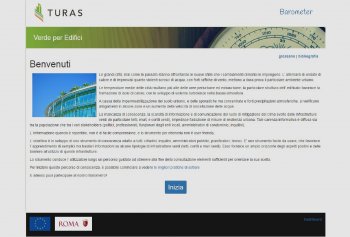
Opinion Barometer
Online tool for collecting information and opinions in the course of introducing new UGI approaches and doing UGI transition projects.
- Dataset
- Software
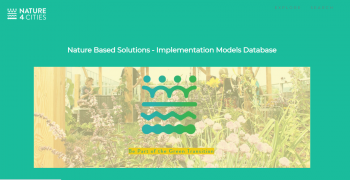
Nature4Cities - Implementation Model Database (IM-DB)
Nature4Cities project developed the Web-based database which allows to check different kinds of implementation models for NbS and NbS related pioneer projects. The database groups urban projects at different scales and in different European countries, using NbS.
- ‹ previous
- 16 of 41
- next ›