Products
Filters
Marketplace
- Infographic
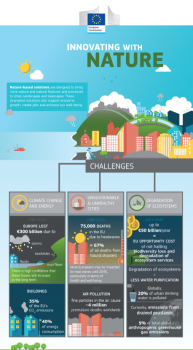
Innovating with Nature: Nature-based solutions
This infographic shows how nature-based solutions can play an important role in solving several of the challenges that our society is living nowadays, such as: Climate change and energy, Unsustainable and unhealthy cities or degradation of ecosystems.
- Document
- Training
The URBES Project
The URBES project bridges the knowledge gap on the role of urban biodiversity and ecosystem services for human well-being. It further aims to inform urban management and decision-makers on how to best integrate the natural environment and human needs. The URBES partnership of academic institutions
- Empty
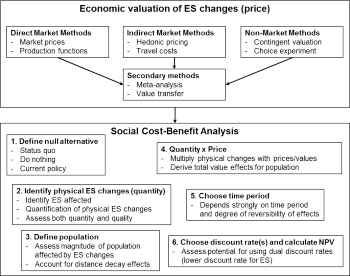
A concise guideline to economic valuation and social cost-benefit analysis
In this guideline we give a concise overview of economic valuation methods for measuring ecosystem service values, and their pros and cons. We also discuss essential elements of social cost-benefit analyses that aim to incorporate ecosystem service values.
- Document
Index of Biodiversity Potential (IBP): a practical tool for forest managers
The Index of Biodiversity Potential (IBP), designed to integrate ordinary taxonomic biodiversity into routine forest management. A composite indicator that influence the ability of forest stands to support various species

- Document
D5.1: Report on comparative analysis of economic valuation models
Findings are presented from an investigation of nature-based solutions (NBS) research and case studies examining how projects address ‘co-benefits’, and particularly, their coverage of economic impacts.

- Policy Brief
Challenges and enablers to financing Nature-based Solutions in Europe
Raising knowledge and awareness about alternative financing and business models for large-scale implementation of Nature-based Solutions (NbS) in European cities has been one of the major impacts of Horizon 2020 project Connecting Nature. The cities of Genk (BE), Glasgow (UK) and Poznan (PL) are

- Software
Nature Value Explorer
www.natuurwaardeverkenner.be The Flemish government recognises the importance of these ecosystem services (ESS). The manual and easy to apply tool uses pragmatic methods to value ecosystem services in rural and urban environments. The tool helps everyone (land managers, planners, national and
- Report
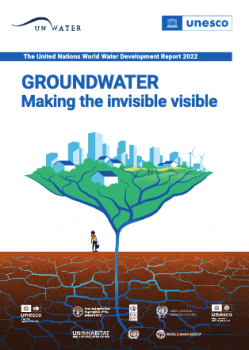
UN World Water Development Report 2022
Accounting for approximately 99% of all liquid freshwater on Earth, groundwater has the potential to provide societies with tremendous social, economic, and environmental benefits and opportunities. Groundwater already provides half of the volume of water withdrawn for domestic use by the global

- Event
- Training
"Geomatics for a Sustainable environment" continuing education and summer school at the University of Geneva
As part of its continuing education program, the University of Geneva proposes a new Certificate of Advanced Studies (CAS) called «Geomatics for a Sustainable Environment» in English. The instructor-led teachings will take place as a Geneva summer school from 4 to 15 September 2017. Several

- Document
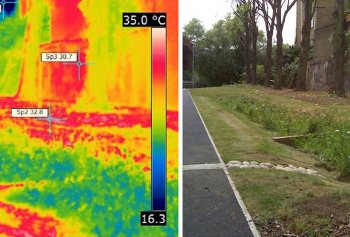
The benefits and risks of rewilding
Rewilding aims to restore healthy ecosystems by creating wild, biodiverse spaces. It rebuilds ecosystems that have previously been modified by human disturbance, using the plant and animal life that would have been present had the disturbance never occurred. In doing so rewilding restores the
- Guidance
- Software

- Dataset
- Document
- Event
- Guidance
Wal-ES Platform
Wal-ES is the walloon (Southern part of Belgium) platform on ecosystem services which aims to develop decision support tools based on this concept. During its one year of funding, Wal-ES set up the foundations for the development of these tools. A conceptual and an assessment frameworks have been
- Document
Conexus key learning factsheet series - Implementation of indicators for Nature-based Solutions: How to organize it?
Indicators were implemented in each CONEXUS Life-Lab through a participatory approach to gather evidence of the multiple benefits of Nature-based Solutions (NbS) within unique local contexts. The process of implementation was closely followed to track progress and to collect experiences. The key
- Document
Partnership Declaration on Collaborative Climate Action
A significant result of ICCA2019 is the Partnership Declaration on Collaborative Climate Action across all levels of government. In the declaration, states, cities, municipalities, federal states, regions and networks commit to more collaboration, communication and support in the implementation of
- Product
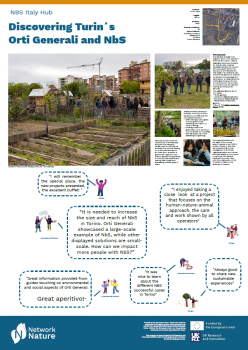
NbS Hubs site visits Posters
During spring 2024, Hubs organised local site visits in their regions for a wide range of stakeholders. 10 NbS hubs represented their experiences of the site visit to a local NbS in a poster. These posters summarise the main outcomes from these site visit, including a short description of the NbS
- Document
- Product
- Report
CONNECTING NATURE CITY REPORT MALAGA, Urban garden in Lagunillas
The City of Malaga is implementing measures to improve the environment and thus also improve the quality of life of its citizens. The city is exploring ways to restore an ecosystem damaged by the impact of economic activity and through the Connecting Nature project, learn more about the
- Document
Conexus Life-Lab factsheet series -Fast Forests for Lisbon: Nature, Community, Connections
The pilot Renatura started in late 2021. Its main goal is to bring back biodiversity to urban spaces, while enhancing social inclusion. Fostering a unique private/public sector partnership, the NGO Urbem and the Lisbon City Council convert abandoned public land into Miyawaki-based Fast Forests.

- Training
- Dataset
Panorama - solutions for a healthy planet
Panorama is a partnership initiative to document and promote examples of inspiring, replicable solutions across a range of conservation and development topics, enabling cross-sectoral learning and inspiration. This platform houses a number of thematic portals, and is envisioned to be continuously

- Document
- Guidance
- Training
Greening the Grey: A framework for integrated green grey infrastructure.
The University of Glasgow (with Oxford University and NERC) have created a Framework for green-grey infrastructure. The IGGI report includes16 detailed case studies and 30 vignette examples of costed, innovative real world exemplars where "green" habitat has been included in grey
- Document
Narrative Methods Factsheet
Narrative methods aim to understand and describe the importance of nature and its benefits to people with their own words. By using narrative methods we allow the research participants (residents of a certain place, users of a certain resource, or stakeholders of an issue) to articulate the plural
- ‹ previous
- 17 of 41
- next ›