
Products
Filters
Marketplace
- Document
Label Bas Carbone: a national forest carbon offsetting framework
Low carbon label (LBC) applied as the French standard for carbon offsetting projects but also to label the contribution of companies and communities to CO2 sequestration in the forest, as an ecosystem service benefiting the whole society

- Document
- Guidance
Addressing Climate Change in Cities – Catalogue of urban nature-based solutions
Nature-based solutions (NbS) are solutions that are inspired and supported by nature. They can be used in urban settings to complement or replace "traditional" or "grey" solutions to perform functions, such as thermal insulation and stormwater retention and filtration. Focusing

- Guidance
- Software
CLIMSAVE Integrated Assessment Platform
The CLIMSAVE Integrated Assessment Platform is a user-friendly, interactive web-based tool that allows stakeholders to assess climate change impacts and vulnerabilities for a range of sectors, including agriculture, forests, biodiversity, coasts, water resources and urban development. The linked
- Document
- Guidance
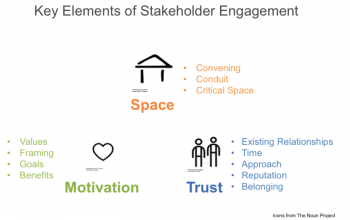
Creating Space, Aligning Motivations, and Building Trust: Key Elements of Stakeholder Engagement in 12 Ecosystem Services Case Studies
Using examples from all twelve of the OPERAs Exemplar case studies, this guidance document puts forth a stakeholder engagement framework comprising three key elements and their respective components, and demonstrates how awareness of key issues and a strategy for addressing them can help build
- Paper
Tackling the climate and biodiversity crises in Europe through Urban Greening Plans: Recommendations for avoiding the implementation gap
To systematically bring nature back to cities, the EU Biodiversity Strategy calls upon cities with over 20,000 inhabitants to develop Urban Greening Plans (UGP) by the end of 2021. UGP present a unique opportunity for the systematic integration of urban green infrastructures in urban planning

- Dataset
EPIC WebGIS Portugal
EPIC WebGIS is an interactive spatial data infrastructure, which provides georeferenced cartography at a national scale, using data visualization tools.
- Consultancy
- Software
- Training
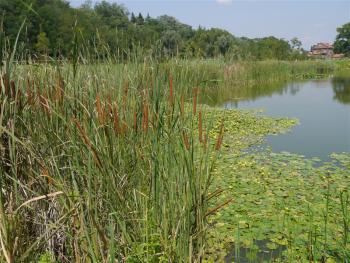
Sustainable Water Management - Treatment Wetlands Design
Nature-based solutions like constructed/treatment wetlands, can play an essential role for the water pollution control at urban scale and for reducing the flooding risk while providing positive effects on biodiversity, social acceptance and economics.

- Document
Defining and assessing success in mainstreaming
This background paper draws on reviews of the mainstreaming targets and indicators of selected NBSAPs from countries at different stages of their mainstreaming process, and the approaches to assessing the success of mainstreaming biodiversity and other issues into development. Recommendations are
- Report
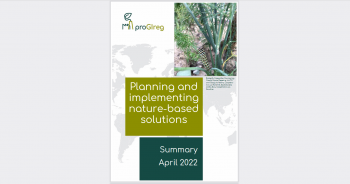
Planning and implementing nature-based solutions - summary
This report is a summary of the proGIreg project's efforts in planning and implementing nature-based solutions, the summary is derived from in-depth reports linked to the end of each chapter. Explore the reports to learn more!

- Empty
Seedbed Intervention: Limerick
In one of our Cultivating Cities, in Limerick, the Seedbed Intervention took place on the Castletroy greenway, which is the target area for the GoGreenRoutes project as it provides connectivity between Castletroy College secondary school (students 12-18 years of age) and Castletroy Gaelscoil (

- Empty
D3.5 Results of six seedbed interventions in the six Cultivating Cities
This report shows the processes and results of six seedbed interventions in the project in the six Cultivating Cities. These interventions were developed in close cooperation between city partners and partners from WP3. Publication Date: 01 Mar 2023

- Document
- Product
- Report
Community Organizing Toolkit on Ecosystem Restoration
Ecosystem degradation has reached the far corners of our planet from our precious rainforests to our priceless reefs. Irresponsible human activities have caused and exacerbated our climate crisis and ecosystem degradation, forcing us to cope with biodiversity loss, habitat destruction, dramatic

- Document
- Paper
- Product
T2.3a Report: Academic paper on NBT within future planning and management of cities
The report presents the development of Nature Based Thinking (NBT) with an emphasis of future planning within cities through a reflective process that was led by SLU, UdL, USFD and TUM in Task 2.3 and resulted in the joint writing of a paper entitled: “Supporting Nature-based Solutions via Nature
- Infographic
NBS EduWORLD Learning Units
The NBS EduWORLD Learning Units page offers a comprehensive and flexible suite of resources designed to integrate Nature-Based Solutions (NBS) into higher education and professional training. With 50 curated Learning Units, this platform supports educators, students, and practitioners at all levels

- Document
Overview of policy instruments enabling restorative nature-based solutions with business case examples (D3.6)
Small and medium sized cities in Europe and Latin America share a common challenge in implementing nature-based solutions (NBS). Most land is in private hands. In addition smaller cities are not early adopters of NBS and may be too small to grow a market for private providers of NBS. This begs the
- Document
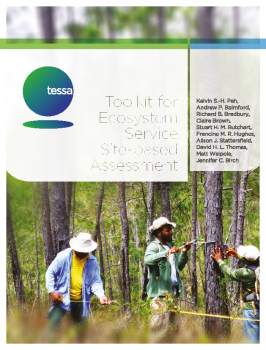
TESSA - Toolkit for Ecosystem Services Site-based Assessment
The TESSA toolkit provides practical guidance for measuring ecosystem services at the site scale.It effectively communicates the results to aid decision-making on a local level,which is an area existing tools have had limited applicability.TESSA provides scientifically robust information and a

- Document
Approaches to financing nature-based solutions in cities
Prepared in the framework of the Horizon 2020 project GrowGreen (http://growgreenproject.eu/), this working document presents an overview of financing approaches that can be used to deliver nature-based solutions (NbS) in urban areas. It includes a typology of financing mechanisms from the

- Video
- Web platform
CO-IMPACT tool
Developed within the Connecting Nature Project, CO-IMPACT is a decision-support tool allowing officers and cities to create impact assessment plans for their NbS/projects. The main objective is to make the process of building a baseline and impact assessment plan straightforward and simple for
- Document
- Guidance
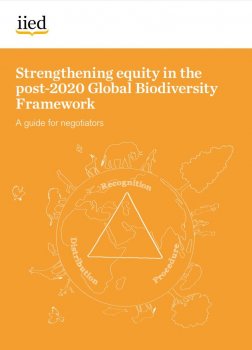
Strengthening equity in the post-2020 Global Biodiversity Framework: a guide for negotiators
The post-2020 Global Biodiversity Framework (GBF) will be a major milestone in global agreements on biodiversity conservation, setting international ambition for the next decade. This guide is intended to support Parties to the Convention on Biological Diversity (CBD) who wish to see strengthened
- Document
Creation of clonal seed orchards for the conservation of Douglas-fir germplasm
Genetic conservation and the production of high-quality locally-adapted propagation material are very important for Douglas fir, especially in the current context of climate change.
- ‹ previous
- 3 of 41
- next ›