
Products
Filters
Marketplace

- Document
- Guidance
- Training
Pitching Green Infrastructure
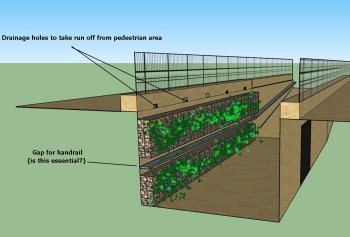
Methodology for assessing urban green infrastructure and planning for ecosystem services.
- Guidance
Green Values
Guidelines to identify, measure and articulate the multifunctional benefits of urban green infrastructure (UGI) projects in order to support the development of cohesive business cases and to inspire project initiators to refine their projects to yield wider benefits.
- Guidance
- Training
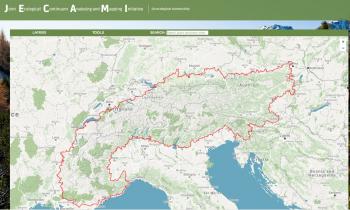
JECAMI (Joint Ecological Continuum Analysing and Mapping Initiative - on ecological connectivity)
JECAMI is an online application that facilitates the analysis of ecological connectivity in the European alpine region. Zoom to your area of interest and discover the values of different connectivity indicators in the Layers menu. If you have a kml layer of your area, just upload it to the CSI

- Consultancy
- Guidance
- Training
Transdisciplinarity and Knowledge Co-Production
CoKnow Consulting is building capacity for inter- and transdisciplinary processes and supports you and your stakeholders to co-produce knowledge and co-design solutions for sustainability. Together we co-develop the right approaches, e.g.: • Design inter- and transdisciplinary processes tailored
- Training
Urban Nature Explorer
A simulation game to address sustainability challenges through nature-based solutions.

- Document
- Product
- Report
Blue Green Infrastructure. A Roadmap Towards a Blue Green Infrastructure Manual
Blue Green Infrastructure (BGI) has the potential to address global challenges such as climate change, biodiversity loss, and water management. However, whilst valuable research on BGI is available, it often remains theoretical in nature which hinders its effective integration into decision support
- Guidance
Impact Assessment Guidebook
This Guidebook presents the Connecting Nature Impact Assessment Framework. This Framework is aimed at supporting cities in developing and successfully implementing robust monitoring and evaluation plans that can deliver systematic and comparable evidence as to NbS effectiveness. This framework
- Document
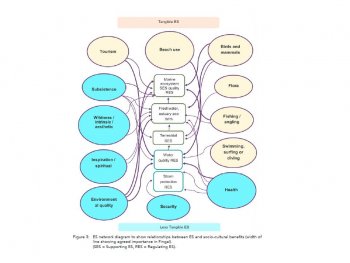
ES Public Consultation Methods
Abstract The concept of Ecosystem Services (ES) is relatively new to environmental policy. ES provided by the natural environment are recognised as an important contributor, directly and indirectly, to human well-being. These include the ecosystem’s provision of natural commodities (e.g. ag-

- Document
Collaborative decision-analytic framework to maximize resilience of tidal marshes to climate change
The article describes an application of collaborative decision analysis with a diverse team of stakeholders who preserve, manage, or restore tidal marshes across the San Francisco Bay estuary, USA, as a case study. A Bayesian decision network revealed that a strategy considering sea-level rise and
- Document
- Report
Insight Report: Seizing Business Opportunities in China’s Transition Towards a Nature-positive Economy
This report by The World Economic Forum lays out a clear roadmaps for Chinese companies to seize the business opportunities offered by 15 priority transitions under three socio-economic systems. These transitions are projected to ad $1.9 trillion in business value and could create 88 million jobs

- Document
- Guidance
OpenNESS Synthesis paper: Thresholds, tipping points and limits
In the ecological literature the terms "threshold" and "tipping points" are often used synonymously. It is suggested to make a difference between the two here. The question of how different types of thresholds are related and how they can be detected or determined first requires

- Document
- Guidance
- Training
Massive Open Online Course (MOOC) on Ecosystem Service and Sustainable Development
We are pleased to announce a new MOOC on Ecosystem Services available immediately on the Coursera platform, produced by the University of Geneva, the Geneva Water Hub, the Luc Hoffmann Institute and the Natural Capital Project. Is this course for me? This MOOC is for anybody interested in
- Training
- Video
INTERLACE MOOC on Nature-based Solutions: (3) CO-CREATION as a form of collaborative NbS governance
Urban areas across the globe are facing unprecedented challenges—pollution, climate change, urban sprawl—and traditional solutions are falling short. The INTERLACE project’s Massive Open Online Course showcases how nature-based solutions offer a promising approach to help create resilient,

- Policy Brief
European Forests for biodiversity, climate change mitigation and adaptation
This Future Brief brings together the latest evidence on the ability of Europe’s forests to support biodiversity while removing and storing carbon from the atmosphere, while also providing ecosystem services necessary for climate adaptation and our well-being, and contributing to the bioeconomy and

- Document
- Guidance
- Product
- Web platform
Transform your street!
Youth voices need a platform to express their views on questions impacting their daily lives. Focusing on mobility and public space in cities, this campaign includes a creative competition in which young people can reimagine the design of a local street through the creation of collages and visual

- Event
Metalliferous Hills Jug Band "geoperformance"
The Metalliferous Hills Jug Band (or Jug Band dalle Colline Metallifere, JBCM, in Italian) is an international and inter-generational collective proposing a combination of music and environmental practice, where melody, rhythm, storytelling and science outreach are merged in one situation. The JBCM

- Document
State of the art, good practices and NBS typology
This report presents a series of developments, trends and case studies that exemplify the growing importance that Nature-Based Solutions (NBS), as well as other closely related concepts, are having in thinking and practice around reconciling urban planning, human well- being and sustainability,

- Guidance
Flood Damage Assessment
Methodology for assessing direct and indirect flood based economic losses to allow prioritisation and evaluation of adaptation measures.
- Dataset
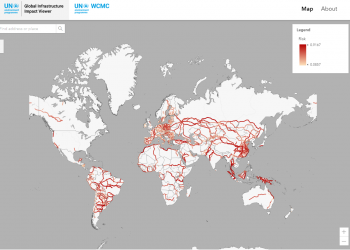
Global Infrastructure Impact Viewer
A tool for visualising the first global database of planned road and railway infrastructure, and the risks and benefits it may pose to people and the natural world. Change the filters below to explore the data, and click on a country or project on the map for further details.

- Document
Vigil'encre: Participatory science tool for epidemiological surveillance of chestnut ink
An app to diagnoze and report suspected cases with precise information and geolocation data for epidemiological surveillance of Phytophthora, helping in understanding disease distribution and its interactions with drought
- ‹ previous
- 23 of 41
- next ›