
Products
Filters
Marketplace
- Document
Conexus key learning factsheet series - Reflections for establishing Urban Life-Labs for governance of Nature-based Solutions
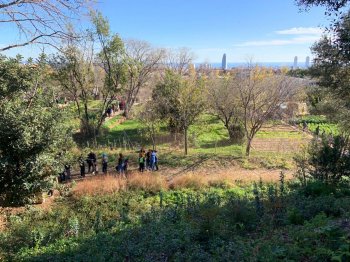
This factsheet presents the key learnings and strategies from the establishment processes of seven Urban Life-Labs located in seven major cities across Latin America: São Paulo, Bogotá, Santiago, and Buenos Aires; and across Europe: Lisbon, Barcelona, and Turin. Each Urban Life-Lab represents
- Document
Decisional Support System to support the revision of forest management plans
OG FORTRACK utilized spatial methods to quantify carbon stock, biomass, and forest types, creating a Decision Support System that facilitates report generation and lowers costs for forest managers.

- Guidance
GIZ ValuES - Method Profile: Scoping ecosystem services for impact assessment (WRI)
This manual for scoping ecosystem services is related to impact assessments. It enables the identification of key ecosystem services that could be impacted by or could constrain the successful implementation of projects at a point when they can still be modified. The complete manual covers six

- Document
GIZ ValuES - Synthesis Report of 19 ecosystem service assessments for different purposes
This case study analysis describes experiences on the ground with ecosystem service assessments and the way they are used in decision making processes. The overall aim was to better understand the role of such assessments and to distil lessons in relation to their effectiveness in supporting policy
- Empty
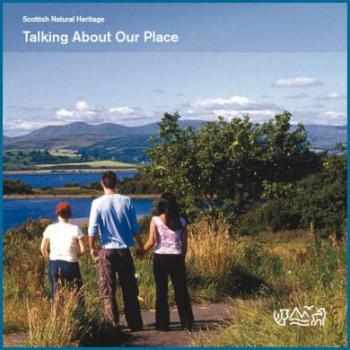
Talking About Our Place
The Talking About Our Place toolkit help a community think about some of the issues their place may be facing, and encourages them to get involved. It will help people: explore what makes their place special recognise what benefits their place provides for identify what issues affect their place or
- Document
- Software
- Guidance
- Dataset
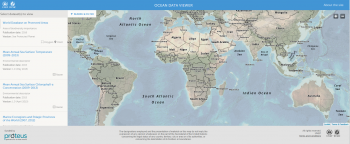
Ocean Data Viewer (ODV)
The Ocean Data Viewer (ODV) offers users the opportunity to view and download a range of spatial datasets of biodiversity importance that are useful for informing decisions regarding the conservation of marine and coastal biodiversity.

- Report
The vital role of nature-based solutions in a nature positive economy
This report is a first step in addressing knowledge gaps in the potential economic benefits of Nature-Based Solutions (NbS) and the challenges facing NatureBased Enterprises (NBE). Based on extensive consultations, we profile some of the economic activities where NBE are engaged in the delivery of

- Document
Stakeholder Engagement Guide - Nature Based Solutions in Cities
What is this guide? Guidance and a set of tools to establish a strong and consistent foundation for outreach and engagement when undertaking City projects in Nature Based Solutions, Regeneration, Housing etc. Who is it for? Any City Official carrying out a natural or built environment project that

- Empty
European Atlas of Forest Tree Species
The European Atlas of Forest Tree Species is the first comprehensive publication of such a unique and essential environmental resource, that is, our trees.

- Training
The BioClim project: Climate change adaptation strategy for the natural environment and bioeconomy in Estonia
BioClim, carried out between January and August 2015, was a project concentrating on mapping the current situation, analysing the climate change impacts and possible adaptation measures for the natural environment and bioeconomy in Estonia.
- Video
Webinar: Ireland's Contribution to a Greener Future
The webinar "Ireland’s Contribution to a Greener Future", hosted by GoGreenRoutes on 16 March 2021, gathered Irish partners involved in EU H2020 and other funded research projects related to the environment, cities and health and well-being. The webinar opened with presentations from

- Guidance
ECOMIMICRY (TURAS)
Innovative landscape design recommendations for maximising the biodiversity value of multi-functional urban green infrastructure (UGI) - designing with regional context

- Guidance
Aligning nature-based solutions with strategic priorities: a practical guide
Urban nature-based solutions have the potential to offer cities a range of opportunities to build climate resilience, improve people’s health and wellbeing, foster social cohesion, enhance biodiversity and develop nature-based enterprises that contribute positively to local economies, all while
- Training
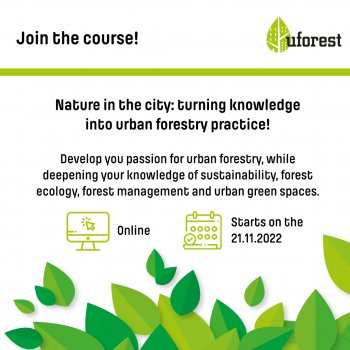
Nature in the city: turning knowledge into urban forestry practice
Are you passionate about forestry, sustainability, and urban design? Would you like to learn how to promote the green transition of cities? This online course provided by Uforest is the right opportunity for you! Urbanisation and climate change are two of the most difficult challenges our

- Report
Implementation of the NbS Framework in Front Runner Cities
This Deliverable reports on the implementation of the Connecting Nature Framework in the Front Runner Cities Genk, Glasgow, and Poznań. It showcases how the cities made use of the framework to implement their nature-based solutions exemplars, and summarises how the cities’ experiences contribute to
- Report
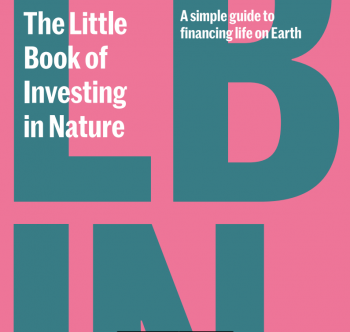
The Little Book of Investing in Nature: A simple guide to financing life on Earth
The Little Book of Investing in Nature aims to energise that dialogue by clearly laying out options for financing biodiversity conservation. While some measures to protect biodiversity may come at an economic cost, others are likely to generate strong returns, economic and otherwise. This book
- Document
Scenario Planning Factsheet
In scenario planning various tools and techniques are applied (often in combination) to develop plausible and internally consistent descriptions of alternative future options (Johnson et al. 2012). Assumptions about future events or trends are questioned, and uncertainties are made explicit (
- Guidance
- Report
- Consultancy
- Guidance
Flood -Turning Disaster to Market
Losing crops is very common with food and other things in a natural disaster. This age, we are all facing this; so why not use the disaster as option. I choose flood to turn it to option. Flood supports surface recharge with vegetation and many other factors. If we coordinate this with management
- Empty
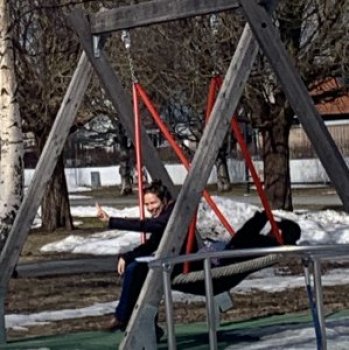
Seedbed Intervention: Umeå
The Cultivating City of Umeå carried out its seedbed intervention. Bölevägen is the name of the street that will be reconstructed over the next two years, along four green spaces that will be designed and developed. The seedbed intervention site, Aspgärdan, was an empty area close to an English
- ‹ previous
- 24 of 41
- next ›