
Products
Filters
Marketplace
- Web platform
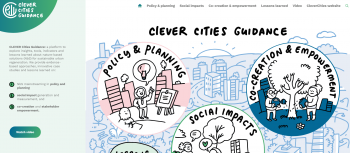
CLEVER Cities Guidance
CLEVER Cities Guidance: a platform to explore insights, tools, indicators and lessons learned about nature-based solutions (NbS) for sustainable urban regeneration. We provide evidence-based approaches, innovative case studies and lessons learned on policy, co-creation, and social impact.
- Report
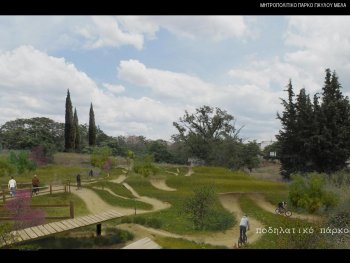
UrbanByNature Programme in Brazil, the Caucasus, Korea and China
To make sure that the valuable processes and outputs of the Connecting Nature project can also go global and inspire local governments beyond Europe in the planning, implementation and upscaling of nature-based solutions, a knowledge exchange and capacity-building programme called UrbanByNature was
- Document
Keys for Forest Types Classification Schemes to support the reporting of Support Sustainable Forest Management Indicators in Various Contexts
For biodiversity monitoring, GO-SURF has emphasized the need for standardization efforts, even through simple solutions such as transition tables.
- Guidance
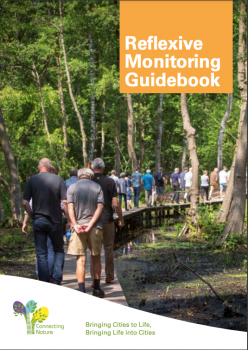
Reflexive Monitoring Guidebook
Reflexive monitoring is an evaluation method that gives urban practitioners insight into the progress of their project in real time. It helps them evaluate day- to-day activities and to respond to them while considering the bigger picture.This is especially helpful when addressing the complex

- Document
- Guidance
Time-use Studies Factsheet
Time use study is an innovation of the conventional stated preference techniques, in particular taken from the contingent valuation approach. In this case, the payment vehicle is expressed in labour hours rather than monetary units (use in the classical willingness to pay studies) (Kenter et al.
- Document
Group Certification for Sustainable Forest Management: Promoting Shared Forest Management and Ecosystem Services Enhancement
This certification is proof of the possibility of overcoming territorial fragmentation for a common objective by uniting public and private forces.

- Document
- Training
Method Factsheet - State and Transition Models
State-and-transition models (STMs) are conceptual models of ecosystem dynamics after disturbances based on alternate state theory (Kachergis et al. 2011). STMs combine the representation of alternate states and the factors that drive the transitions among states with tables of qualitative
- Guidance
- Software
- Training
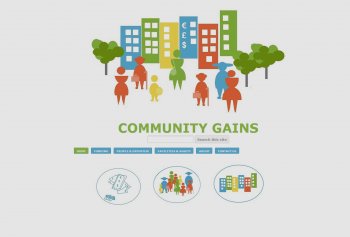
Community Gains
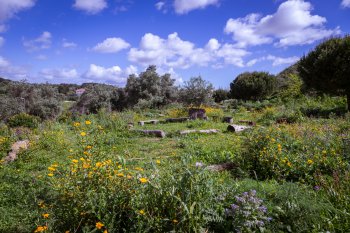
Online-tool to inspire and link community groups and individuals to resources needed to realise their project ideas.
- Document
Conexus key learning factsheet series - Formats for transferring NbS knowledge
In Latin American and European cities, various initiatives are being used for transferring knowledge to different audiences to raise awareness of Nature-based Solutions (NbS) and improve their uptake and implementation. This factsheet highlights some of these initiatives and their experiences as
- Document
- Training
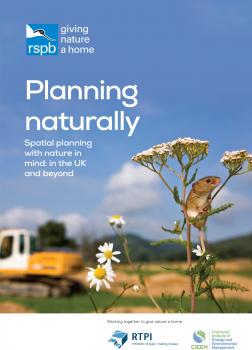
Planning Naturally. Spatial planning with nature in mind: in the UK and beyond
RSPB, CIEEM and the RTPI have come together to show how planning for biodiversity should be integral to every part of the planning process and to inspire with examples of good practice, whatever country you are working in.The report is structured around 12 principles of good spatial planning, and

- Empty
OpenNESS Synthesis paper: Multi-Criteria Decision Analysis
Multi-Criteria Decision Analysis (MCDA) is a general framework for supporting complex decision-making situations with multiple and often conflicting objectives that stakeholders groups and/or decision-makers value differently.
- Dataset
HABEaS - Hotspot Areas for Biodiversity and Ecosystem Services
HABEaS stands for Hotspot Areas for Biodiversity and Ecosystem Services and is a free online geographic information system that provides information on biodiversity and ecosystem services to stakeholders in the Mediterranean Basin. Currently, it covers Portugal and Bosnia and Herzegovina.
- Document
Marteloscope
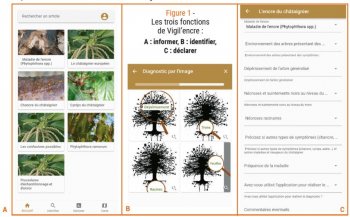
A practical tool for training in silvicultural management of chestnut, oak and beech stands located in Corrèze

- Guidance
- Software
Ready 4 Climate Change
Quick check tool to activate stakeholders and their knowledge on climate change adaptation.

- Document
- Image
- Infographic
GrowGreen Cities Posters
What did the GrowGreen cities achieved? The progress of the different GrowGreen Cities during the last 5 years is summarised in these posters, which illustrate the most relevant results within the project.

- Slides
Presentation on climate-proofing cities through nature
This powerpoint slide provides a case study on a successful example of nature-based solution applied in the urban context: The implementation of urban parks and green areas with sustainable urban drainage systems to handle excess rainwater in Aarhus. This initiative was implemented under the SPARK
- Policy Brief
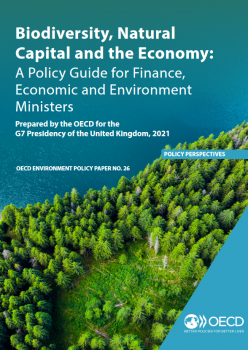
Biodiversity, natural capital and the economy - A policy guide for finance, economic and environment ministers
Nature underpins all economic activities and human well-being. It is the world’s most important asset. Yet humanity is destroying biodiversity at an unprecedented rate, posing significant but often overlooked risks to the economy, the financial sector and the well-being of current and future
- Document
- Event
- Report
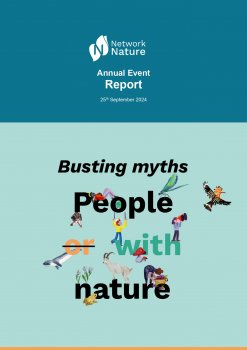
NetworkNature Annual Event 2024 Report | Busting myths: People with nature
This year’s NetworkNature Annual Conference – "Busting myths: People with nature" took place on 25th September 2024, both online and in-person in Brussels, in Belgium. It gathered more than 370 participants, including policymakers, local authorities, researchers, land planners and

- Software
Tweed Forum Catchment Model
The Catchment Model recreates two river catchments in miniature - one catchment featuring various natural flood management (NFM) measures and another reflecting a more typical modern rural landscape. "Rain" is introduced into the catchment via a number of nozzles and the resulting flow

- Document
- Guidance
Curatorial Planning
Methodology for formulating a shared local vision using a systematic "transversal approach".
- ‹ previous
- 39 of 41
- next ›