
Products
Filters
Marketplace
- Video
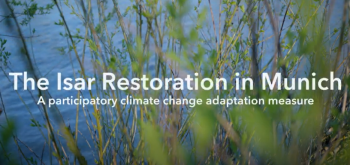
The Isar Restoration in Munich - A participatory climate change adaptation measure
The Isar river concept case is a 'retrospective case' focusing on NbS practices along the river Isar in Bavaria, Germany. Measures to reduce flood risk and improve the ecological state of the river and its immediate surroundings were taken several years ago and the previous Isar
- Document
Decision support tool : an Integrated green grey framework
Guidance on innovations in green grey infrastructure - costed examples and more, see http://eprints.gla.ac.uk/150672/.

- Document
- Guidance
Integration of NBS in local governance contexts and urbanisation trajectories in CONEXUS EU and CELAC cities. Evidence from Barcelona, Buenos, Aires, Bogotá, Lisbon, Santiago, São Paulo and Turin
The present report analyses the current state of integration in Nature-Based Solutions (NBS) governance and planning processes within and across scales and dimensions of all CONEXUS cities: Barcelona, Buenos, Aires, Bogotá, Lisbon, Santiago, São Paulo, and Turin. Different levels of cooperation

- Dataset
- Document
- Training
REstoring rivers FOR effective catchment Management (REFORM)
REFORM (REstoring rivers FOR effective catchment Management, http://reformrivers.eu/) brought together 26 renowned research institutes and applied partners from15 European countries to generate tools for cost-effective restoration of river ecosystems, and for improved monitoring of the biological
- Report
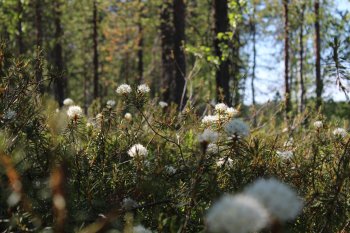
Forest Biodiversity in Europe - From Science to Policy
This report aims to explore the importance of biodiversity in the context of European forests and to make suggestions on how this biodiversity can be effectively maintained and enhanced through protection, management and restoration. The report is meant for all kinds of decision-makers at the EU,

- Document
VÍZGAZDÁLKODÁS: Dombvidéki természetalapú vízmegtartási megoldások
A Magyar Mérnöki Kamara Kiadványsorozatában megjelent mérnöki útmutató egy segédlet a települési szintű klíma adaptációhoz. A szöveg összegyűjti és rendszerezni azokat a fogalmakat és ismereteket, amik szükségesek a települési szintű vízgazdálkodási rendszerek kialakításához. Bemutatja a

- Document
Understanding Stakeholder Values for Woodland Expansion - Briefing Note
Despite woodland expansion being advocated via a number of policy documents, barriers to woodland creation in Scotland remain. These include contested views about land use amongst multiple stakeholders, concerns around trade-offs with other land uses, and a lack of synergy between policies and
- Paper
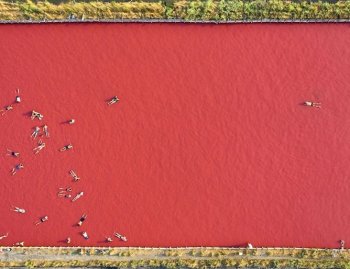
Innovating with Nature: Factors Influencing the Success of Nature-Based Enterprises
Nature-based enterprises (NBEs) have recently emerged as important actors in the delivery of nature-based solutions (NbS) to societal challenges, but little is known about the context in which they operate and the factors influencing their development. The empirical research undertaken in this

- Document
- Guidance
Conservation of small mammals and associated ecosystems
The “Conservation of small mammals and associated ecosystems” policy brief is focusing on the importance of European policies (for example, the Common Agricultural Policy, the EU Strategy on Climate Adaptation) and actions in the context of the conservation of small mammals and other species which

- Guidance
Local Ecological Footprinting Tool (LEFT)
LEFT presents a simple yet effective method for mapping ecological important landscapes beyond protected areas. The method uses existing globally available web-based databases and models to provide an ecological score based on five key ecological features (biodiversity, fragmentation, threat,

- Software
- Training
Community Geotimeline
Online tool for harnessing and assessing community capital and resilience.

- Guidance
- Software
Penta-helix Stakeholder Management
Discussion tool to map stakeholder interests and explore ways of negotiating social complexity.

- Document
The URBES project - European URban Biodiversity and Ecosystem Services
This animated movie entitled “What’s the role of nature? Scientists at the URBES project inspire sustainable urban planning for people and nature” shows the results of the ‘Urban Biodiversity and Ecosystem Services’ (URBES) research project funded by BiodivERsA. It presents the key research

- Document
Conexus key learning factsheet series - Nature-based Solutions in Latin American and European countries: Trends and perspectives
The conceptual development and practical implementation of Nature-based Solutions (NbS) has rapidly advanced in the European Union (EU) and Latin American (CELAC) cities. A 2000-2020 literature review on NbS and related concepts shows advances, gaps, and insights, generating a valuable reference on

- Guidance
Green Infrastructure Valuation Toolkit
A toolkit for valuing the benefits of green infrastructure, consisting of a spreadsheet calculator and a user guide. Monetary and non-monetary values are calculated, generally using a benefits transfer approach. Can be used either to value a planned intervention, or existing green infrastructure.
- Guidance
GIZ ValuES - Method Profile: Participatory mapping
Contrary to other mapping tools, participatory mapping does not primarily draw on statistics or research data, but on the practical knowledge of people. Participatory mapping visualizes local knowledge and makes it visible to all. There are several participatory mapping tools available. In an

- Video
The vital role of Nature-based Solutions in a nature positive economy
The Working Group on the Nature-Based Economy of Taskforce 3 produced this short video to highlight the main recommendations of the EC Expert Publication "The Vital Role of Nature-based Solutions in a Nature-Positive Economy". Watch the video and check out the report, which is a first

- Report
European Academies Science Advisory Council - Regenerative agriculture in Europe
This report takes as a first point of departure the goals and commitments made in the recent European Commission’s Green Deal, and specifically the Biodiversity and Farm to Fork Strategies, for dealing with both climate change and biodiversity loss while at the same time securing production of an

- Guidance
GIZ ValuES - Method Profile: TESSA – Toolkit for site-based ES assessment
The TESSA-toolkit focuses on a site-scale-level, such as a wetland, using information gathered locally. The toolkit can help assess climate regulation, flood protection, water provision, water quality improvement, harvested wild and cultivated goods and nature-based recreation. The toolkit is
- ‹ previous
- 7 of 41
- next ›